Why Version Control Exists: Lessons from the "Pendrive Era" of Coding
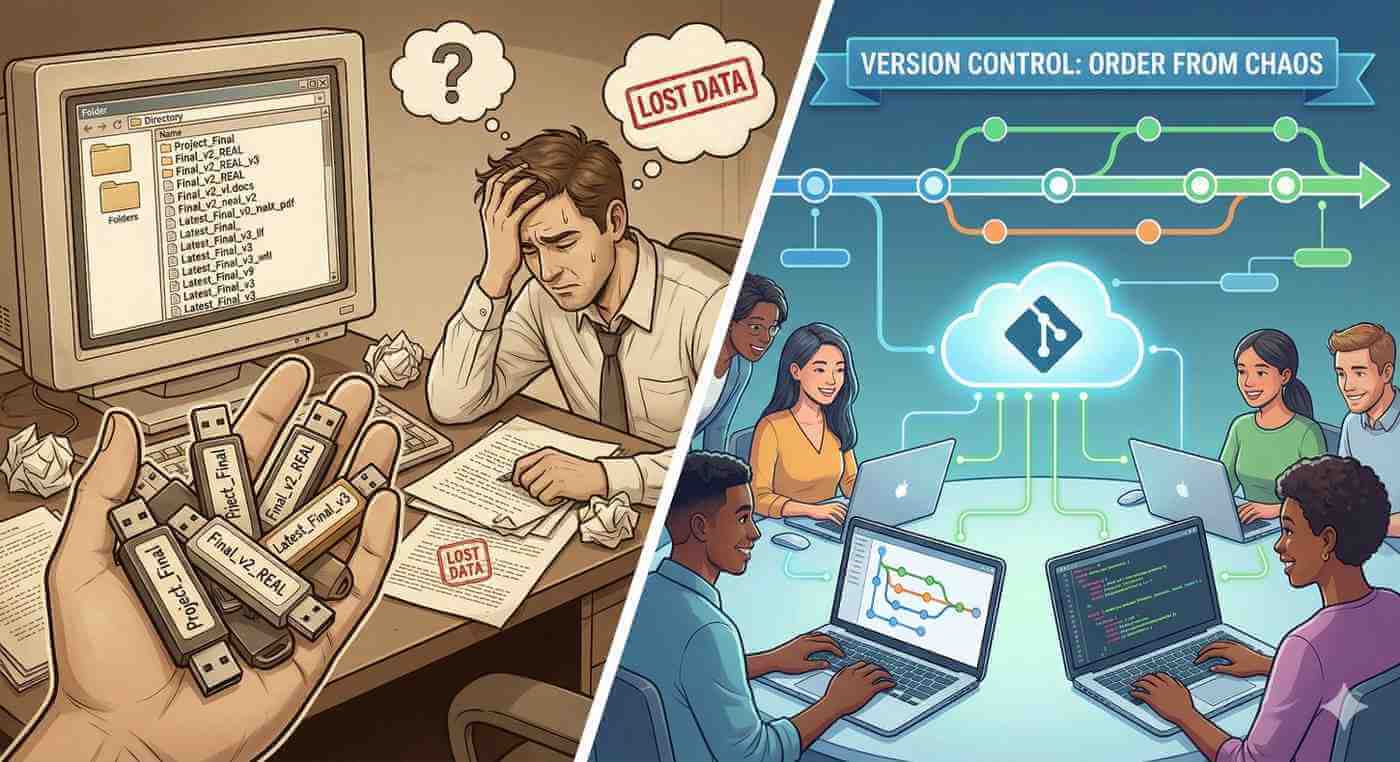
To understand why tools like Git are absolutely mandatory in modern software development, we have to step back in time. We need to look at what coding was like before these systems existed.
If you have ever written a university paper or worked on a long-term report, you already know the struggle. Your document folder probably looked something like this:
Thesis_draft.docxThesis_draft_v2.docxThesis_FINAL.docxThesis_FINAL_REALLY_THIS_TIME.docxThesis_FINAL_v4_reviewed_by_mom.docx
This chaotic method of managing changes is bad enough when you are working alone on a single file. Now, imagine applying that chaos to a software project containing hundreds of files, being worked on simultaneously by a team of ten developers.
Before modern Version Control Systems (VCS), this chaos was the reality of software engineering.
The "Dark Ages": The Pendrive Analogy
Before high-speed internet became ubiquitous and centralized cloud servers became the norm, moving code between developers often required physical effort.
Let’s imagine a scenario from the "dark ages" of development, circa late 1990s or early 2000s. You are on a team of three building a website: Alice is working on the homepage, Bob is working on the database connection, and Charlie is designing the user profile page.
The "Sneaker-net" Workflow
It's Friday afternoon, and it's time to combine everyone's work to show the client. How do you do it?
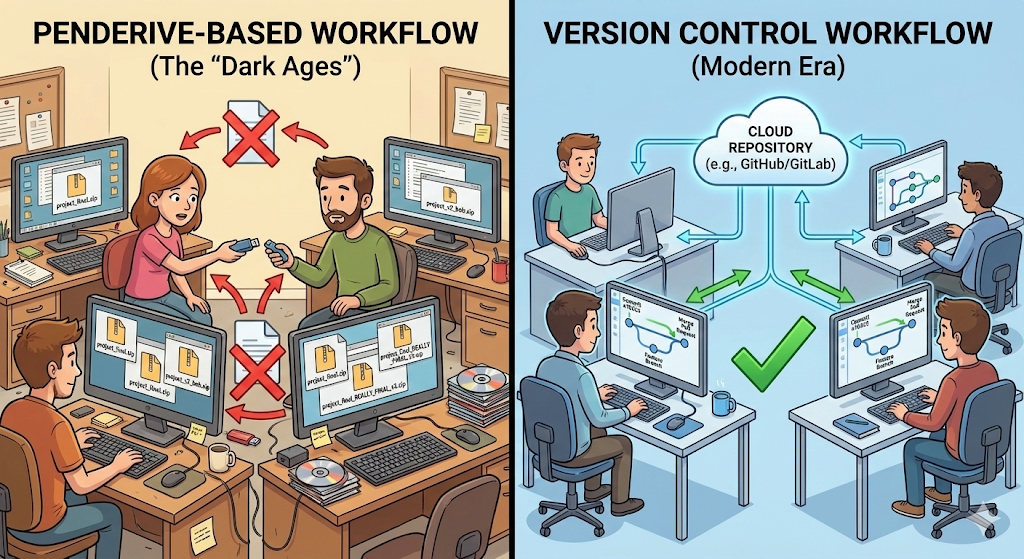
The Physical Transfer: Alice plugs a USB pendrive into her computer and copies her project folder onto it. She ejects it, walks across the office to Bob's desk (this was jokingly called "sneaker-net"), and hands him the drive.
The Manual Merge: Bob plugs the drive in. He now has Alice's folder and his own folder. He has to manually open the files and figure out how to copy Alice's new HTML into his version without breaking his database code.
The Email Attachment: Meanwhile, Charlie is working remotely. He zips up his project folder into a file named
website_charlie_friday_update.zipand emails it to Bob.The Chaos: Bob is now sitting at his desk with three different versions of the same website on his desktop, trying to stitch them together like Frankenstein's monster, hoping he doesn't accidentally delete something vital.
The Catastrophic Problems of the Past
The "Pendrive and Zip File" method of software development was fraught with danger. Without a dedicated system to manage changes, teams faced crippling issues on a daily basis.
1. The "Overwrite" Disaster
This was the biggest fear of every developer.
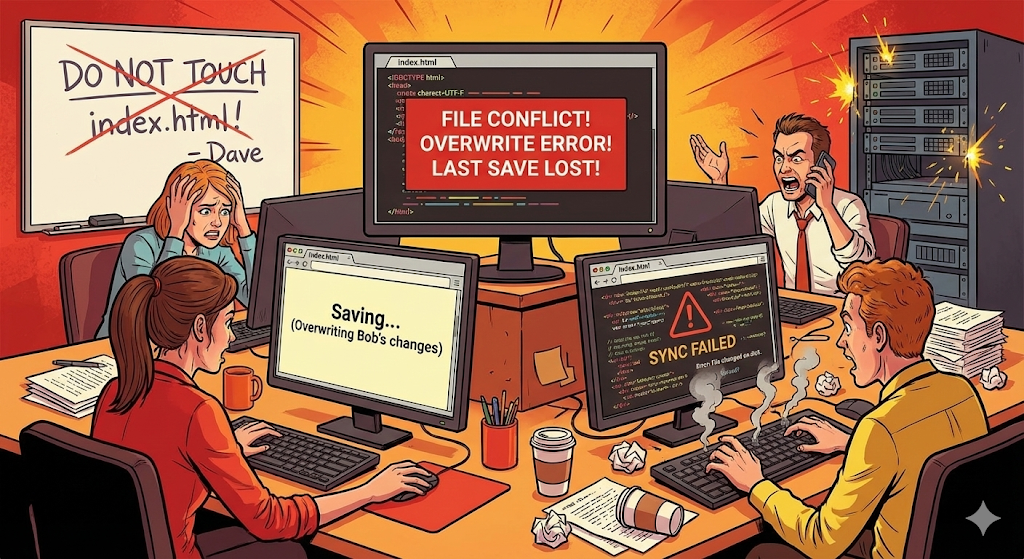
Imagine Bob spends four hours fixing a critical bug in script.js. He saves his work and goes to lunch. While he is gone, Alice realizes she needs to make a quick cosmetic change to the same file. She copies an older version of the project from the team's shared network drive, makes her cosmetic tweak, and copies the entire folder back to the shared drive.
Bob comes back from lunch, and his four hours of work are gone. Alice’s copy overwrote his. There is no "undo" button for overwriting a file on a server.
2. The Loss of History (No Accountability)
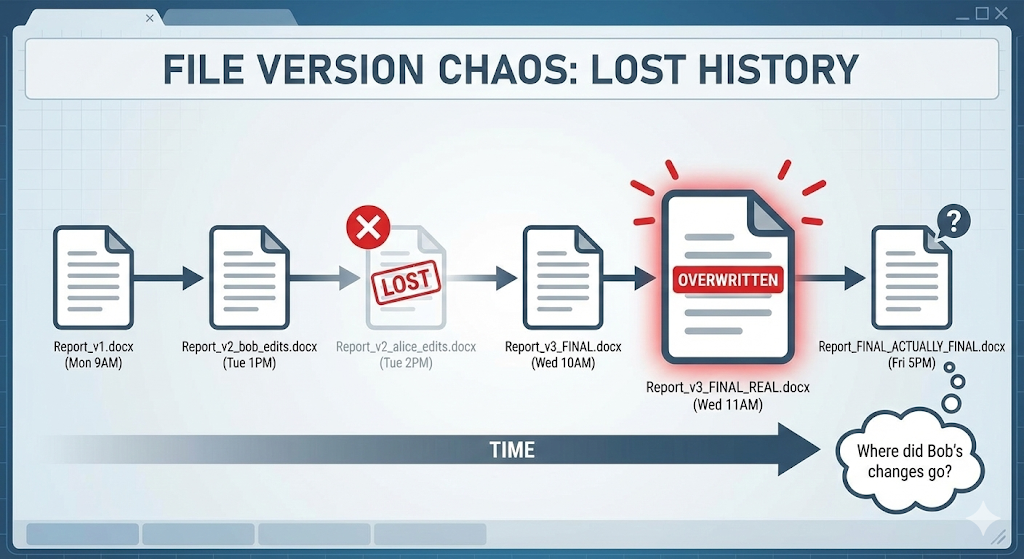
Six months into a project, a crucial feature suddenly stops working. The team looks at the code, and it’s a mess.
Who changed this line of code? No one knows.
When was it changed? The file timestamp says "yesterday," but maybe that's just when it was copied last.
Why was it changed? There is no context, no note attached to the change explaining the developer's intent.
Without version control, code is just a snapshot of "now." You cannot rewind time to see what the project looked like last week before the bug was introduced.
3. The Paralysis of Collaboration
Because overwriting each other's work was so easy, teams often worked in a state of paralyzed fear.
Developers would have to "shout across the room" to "lock" files: "Hey everyone, I'm working on the 'Login.js' file, NOBODY TOUCH IT until I say so!"
This meant only one person could effectively work on a specific part of the codebase at a time, drastically slowing down development.
The Transition to Mandatory Version Control
As software grew more complex and teams grew larger, the pendrive method became unsustainable. The risks of losing code and the sheer man-hours wasted manually merging files cost companies millions.
The industry had to change. This necessity gave rise to centralized systems (like Subversion/SVN) and eventually distributed systems (like Git).
Version Control exists because software is too valuable and too complex to be managed by emailing zip files around. It replaced the fragile pendrive with an intelligent, indestructible history book that allows hundreds of people to work on the same project simultaneously without stepping on each other's toes.